Back to Blog
Energy Purchasing Is About Microeconomics, Not Headlines
Learn why smart energy purchasing focuses on local microeconomics, not national headlines, for strategic savings and better decision-making.


Copy Link
Energy purchasing decisions should be driven by your local market conditions, not national economic headlines.
You’ve seen it before: a big headline drops in the New York Times about oil prices plummeting or inflation cooling off, and suddenly someone’s forwarding it around saying, "We should lock in our energy now!"
But here’s the thing: macroeconomics might explain what just happened, but it’s not what determines how, or when, you should buy energy.
Macroeconomics Tells the Story. Microeconomics Makes the Decision.
Macroeconomic trends—things like inflation, global oil prices, or geopolitical headlines—can give you a broad view of what’s going on in the world. They can help explain why there’s a dip or why volatility is up.
But they won’t tell you when to buy, how to buy, or what the right strategy is for your business.
Because in energy purchasing, what really matters is microeconomics:
Which utility territory are you in?
What does the local forward curve look like?
What’s your risk profile and usage pattern?
What’s happening in your regional capacity or transmission market?
These local, specific factors drive the price you’ll actually pay—and determine whether that price is good or bad.
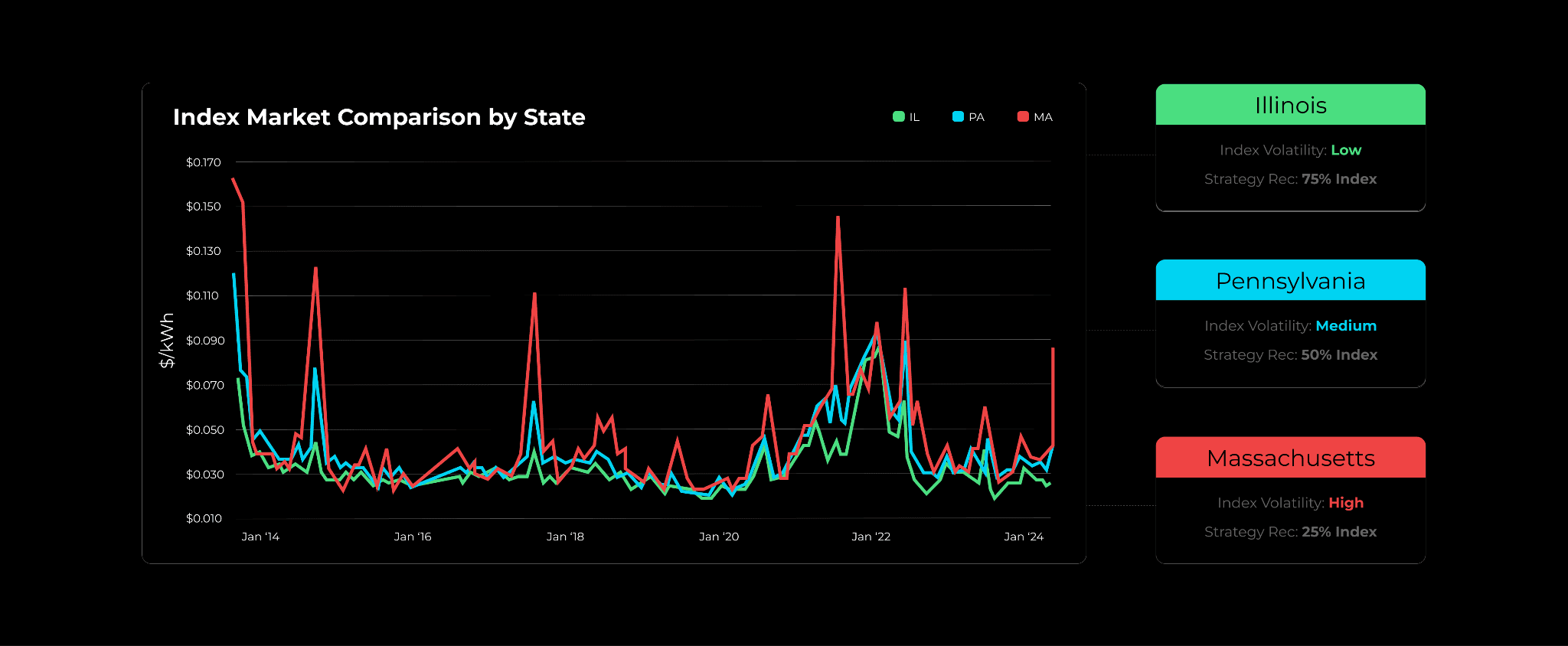
You’re Not Buying Today’s Rates, You’re Buying Forward Contracts
When you purchase energy, you're not buying what’s happening today, you’re buying a contract for future delivery, often 1–3 years out.
So while headlines might talk about prices dropping right now, those short-term dips may have little to no impact on the forward curve for future years. In fact, market volatility today can actually drive future prices up depending on how suppliers react.
That’s why focusing on today’s macroeconomic news can be misleading.
What matters is how local supply, demand, weather, and grid constraints are shaping future costs—not what the headlines say about prices today.
The Risk of Overreacting to Macro Trends
When companies react to macro headlines, they often:
Lock in at the wrong time, based on emotion instead of data
Choose the wrong strategy (fixed vs. index vs. hybrid)
Miss out on local opportunities that aren’t reflected in national news
It’s like trying to make a stock trade based only on a headline about the economy, without actually checking the performance of the stock itself.
What Smart Energy Buyers Focus On
Fortune 500 companies don’t buy energy based on news cycles.
They look at:
Their portfolio mix
Their exposure to volatility
What their specific utility markets are doing
How to layer in risk strategically over time
That's the difference between reacting to headlines and buying with a strategy.
Key Takeaway
Macroeconomic headlines explain what already happened in energy markets, but they don't tell you when or how to buy. Local factors, your utility territory, forward curve, risk profile and usage pattern, determine the price you'll actually pay. Smart buyers act on those local signals, not on national news cycles.

Let's Get Started
Get a free portfolio analysis to see what your strategy is actually costing you.